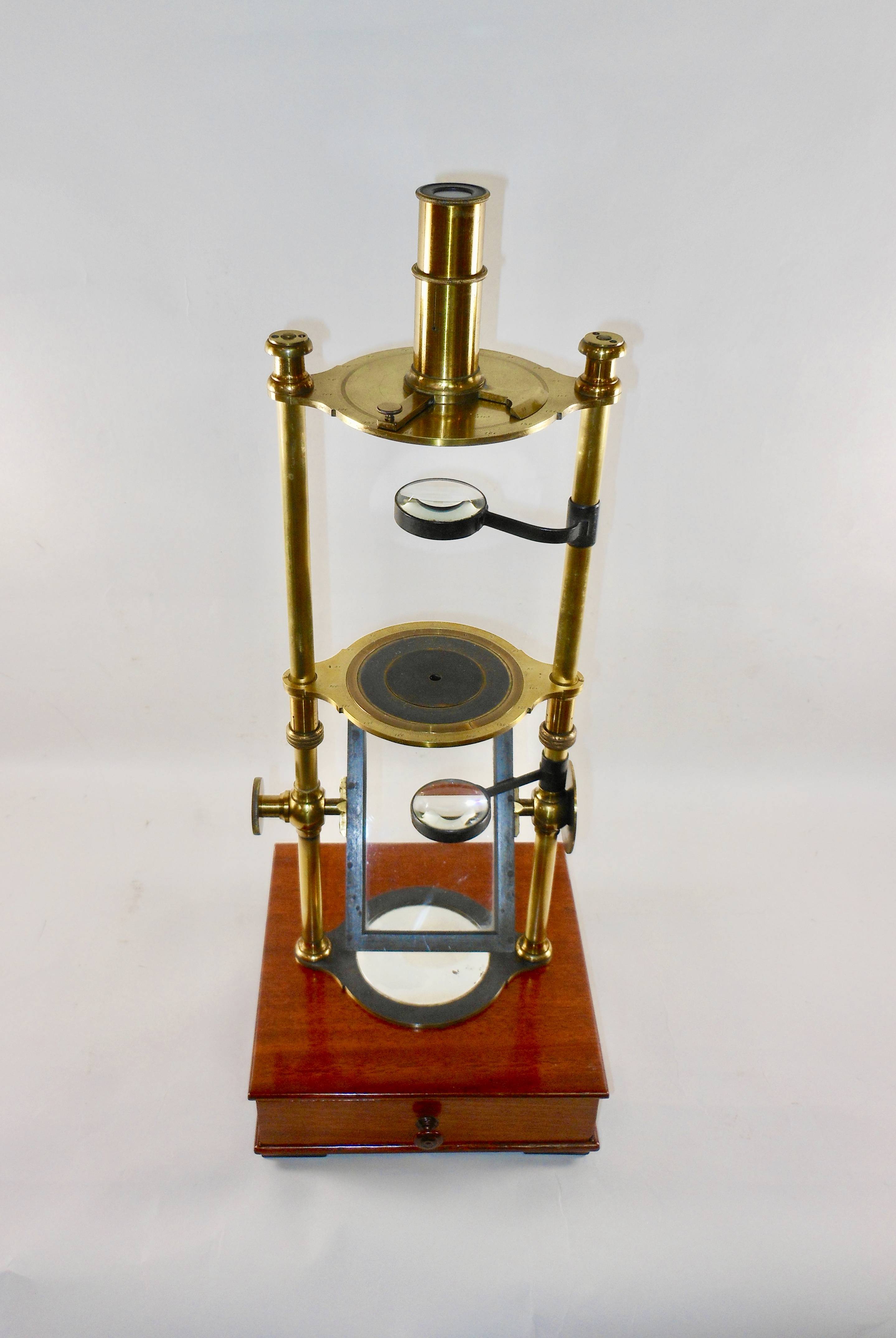
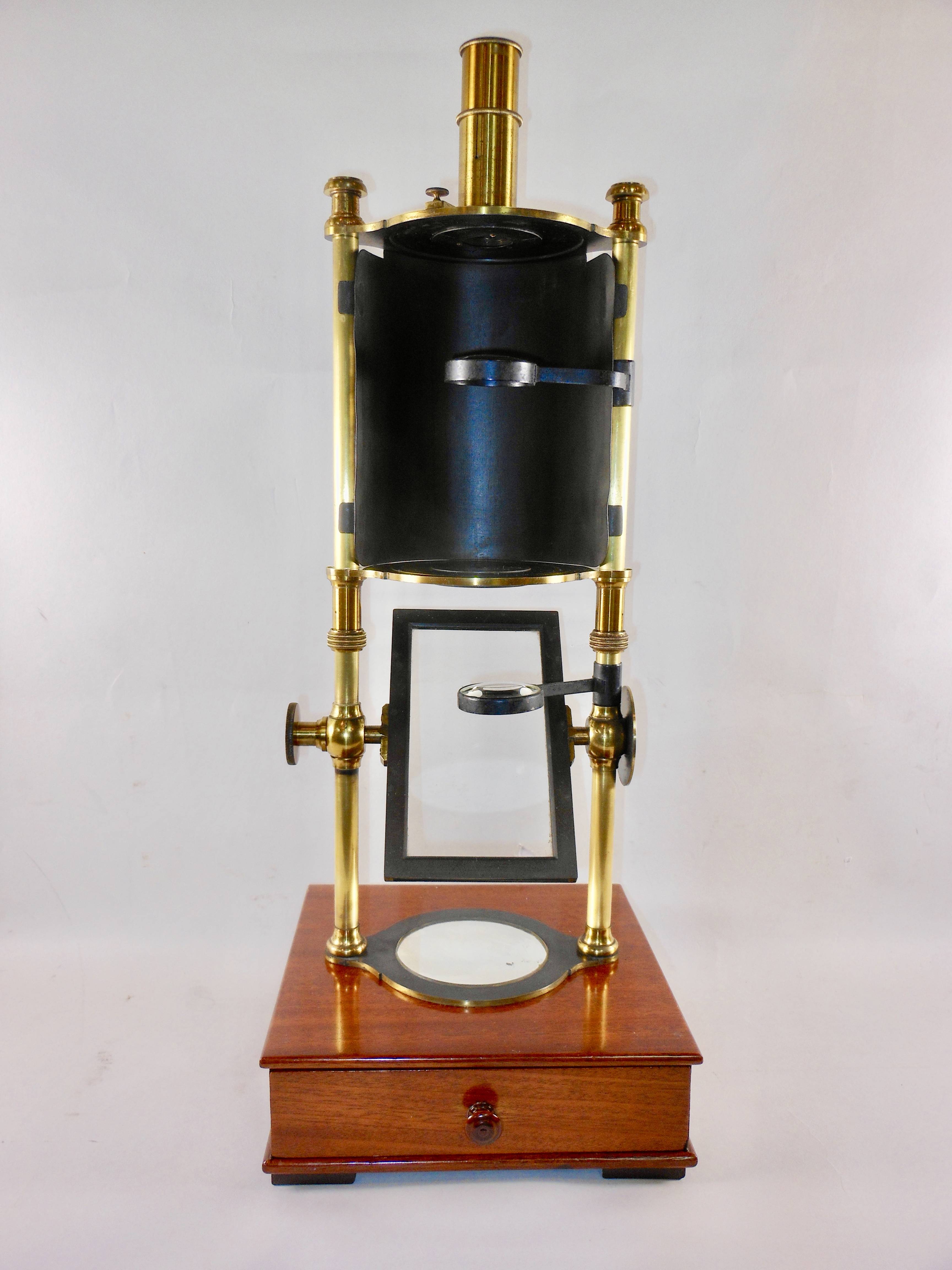
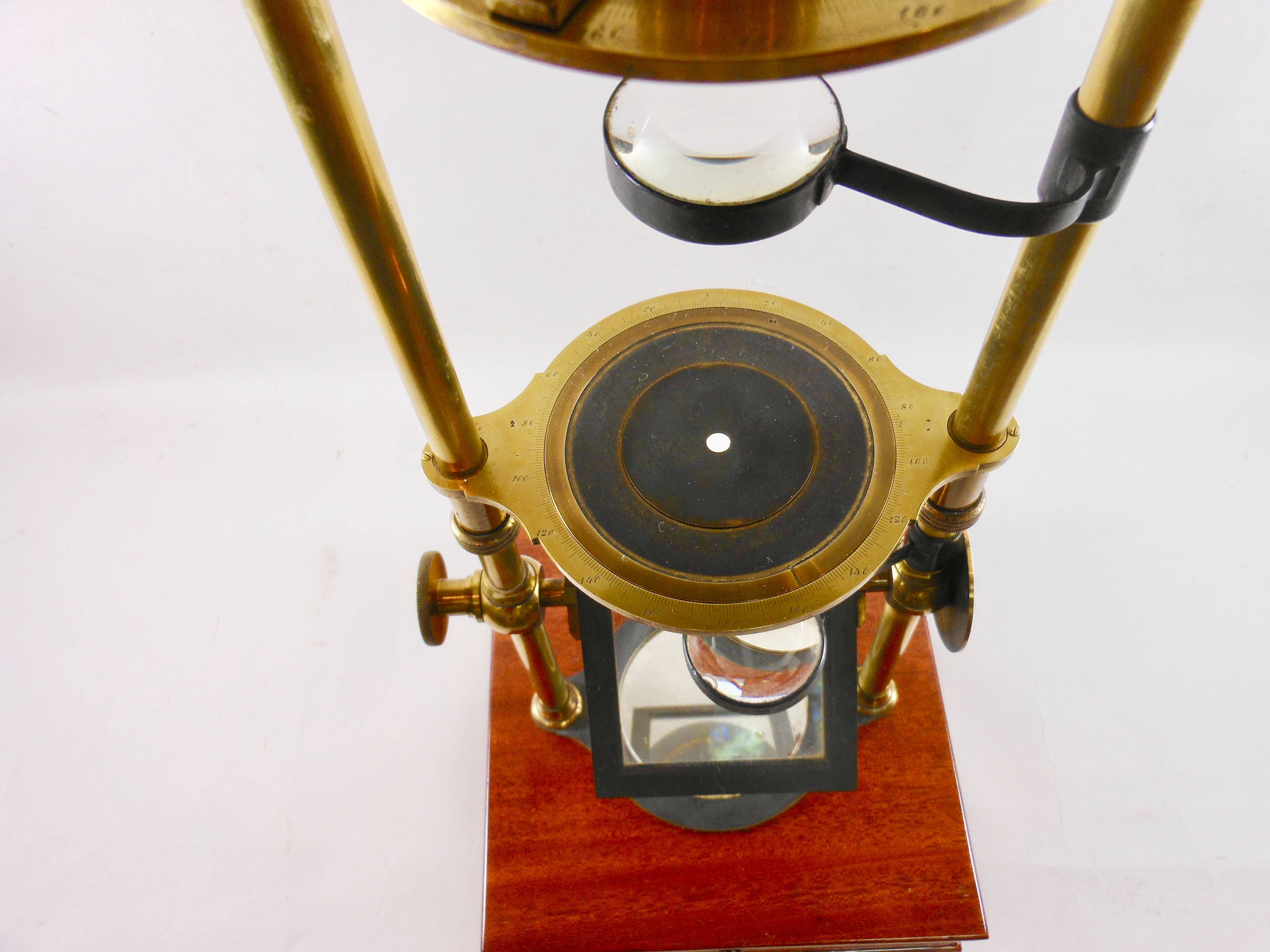
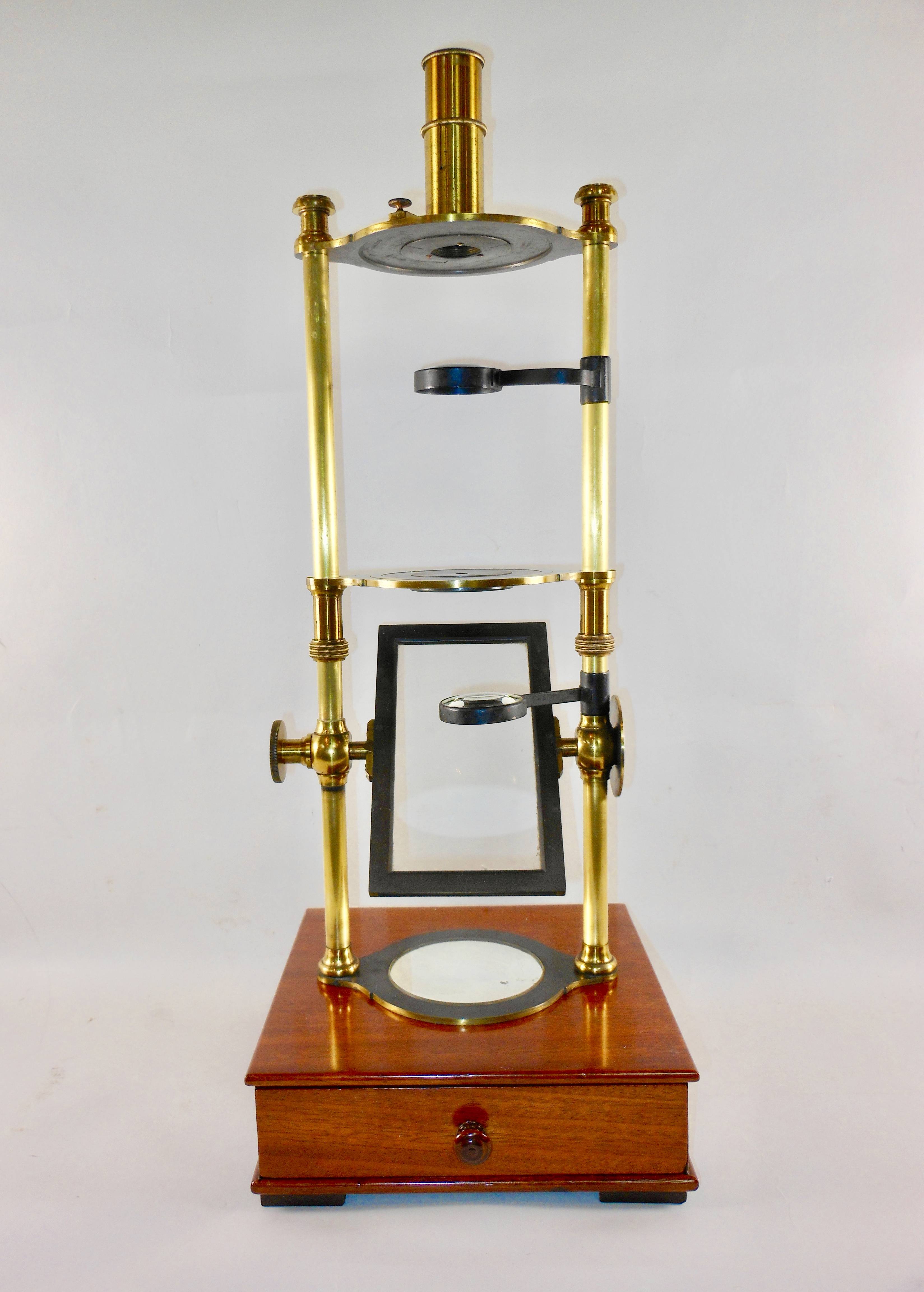
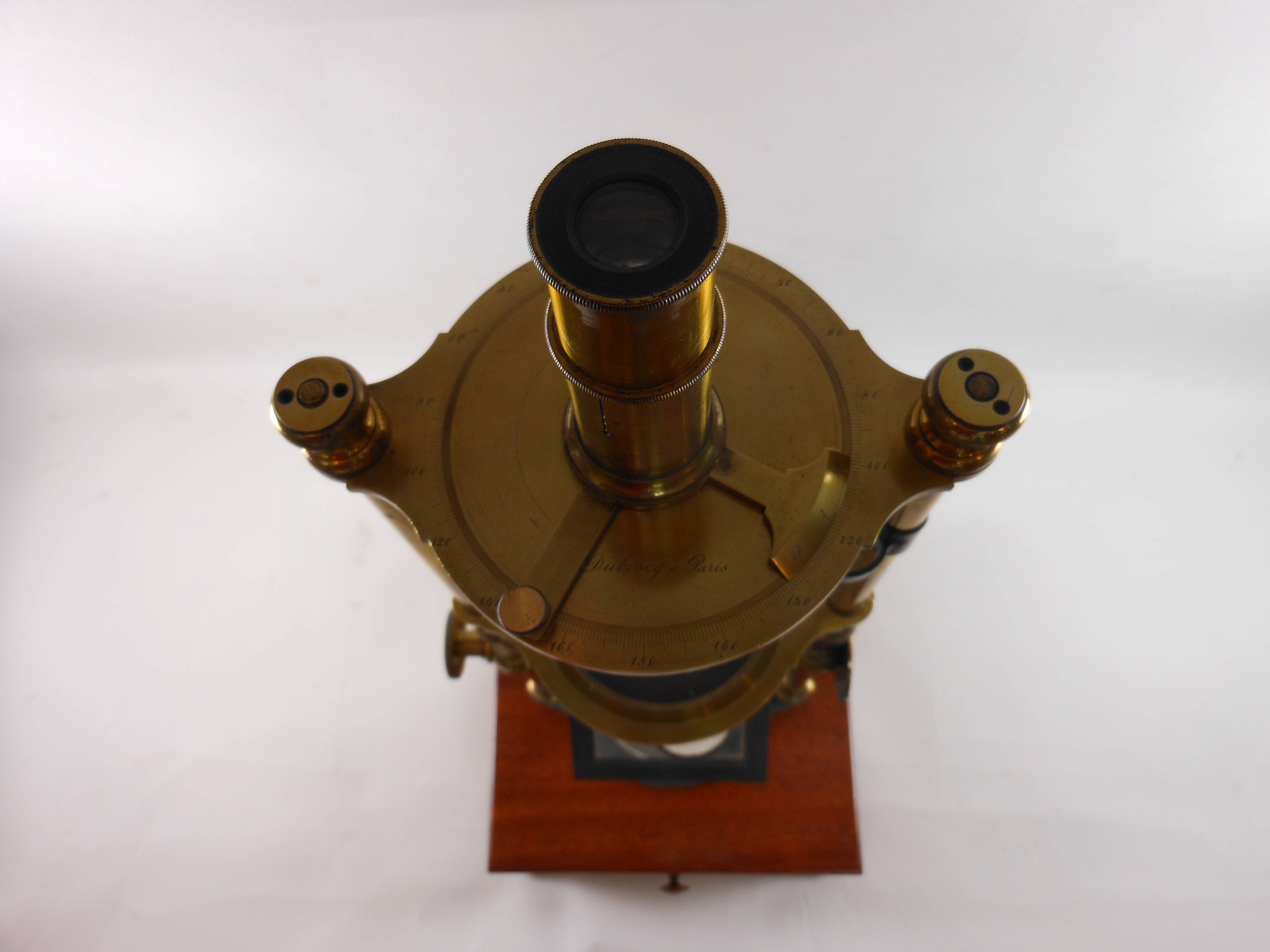
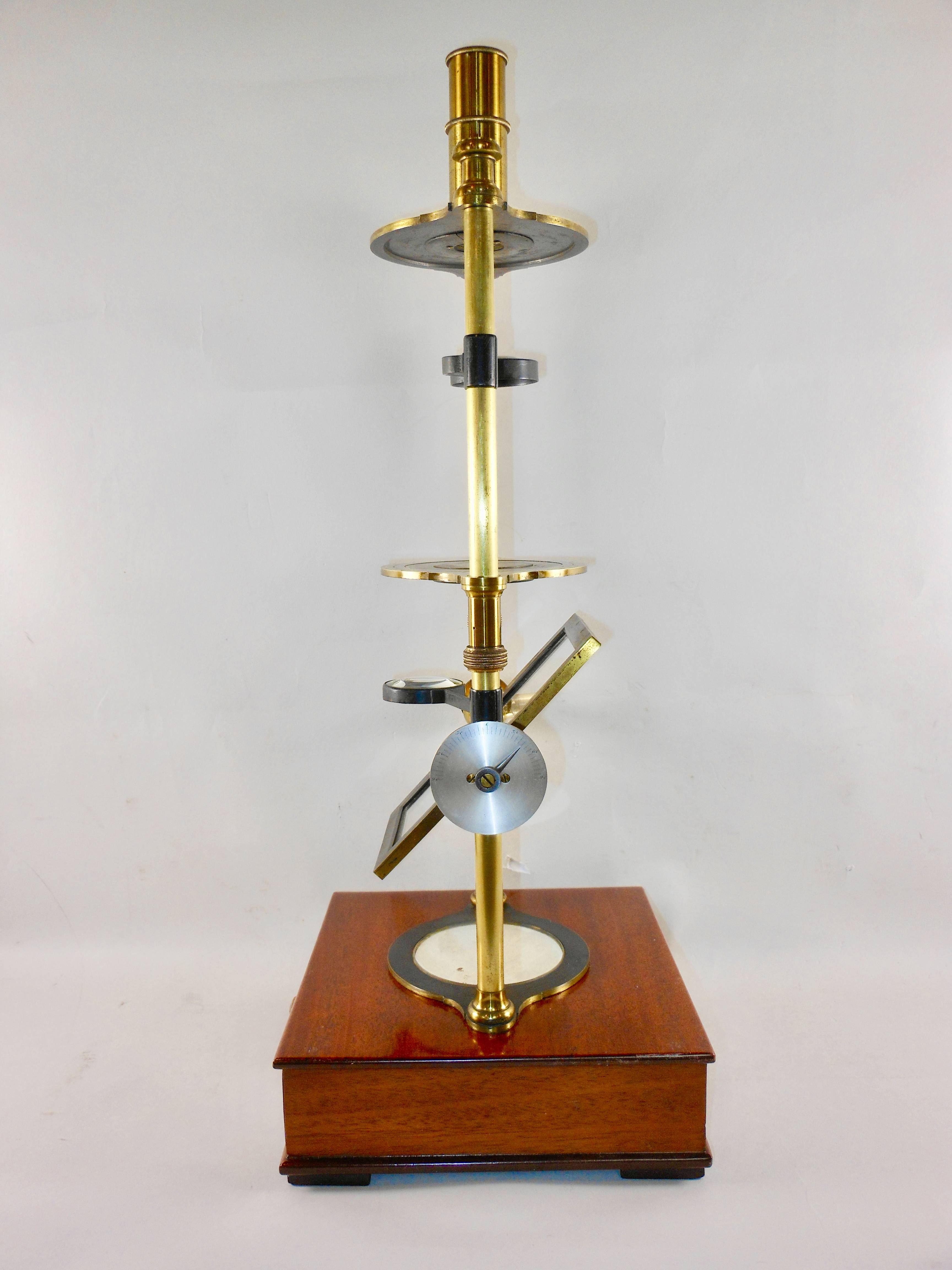
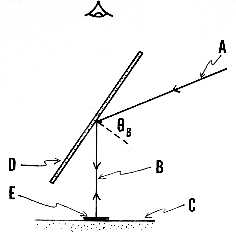
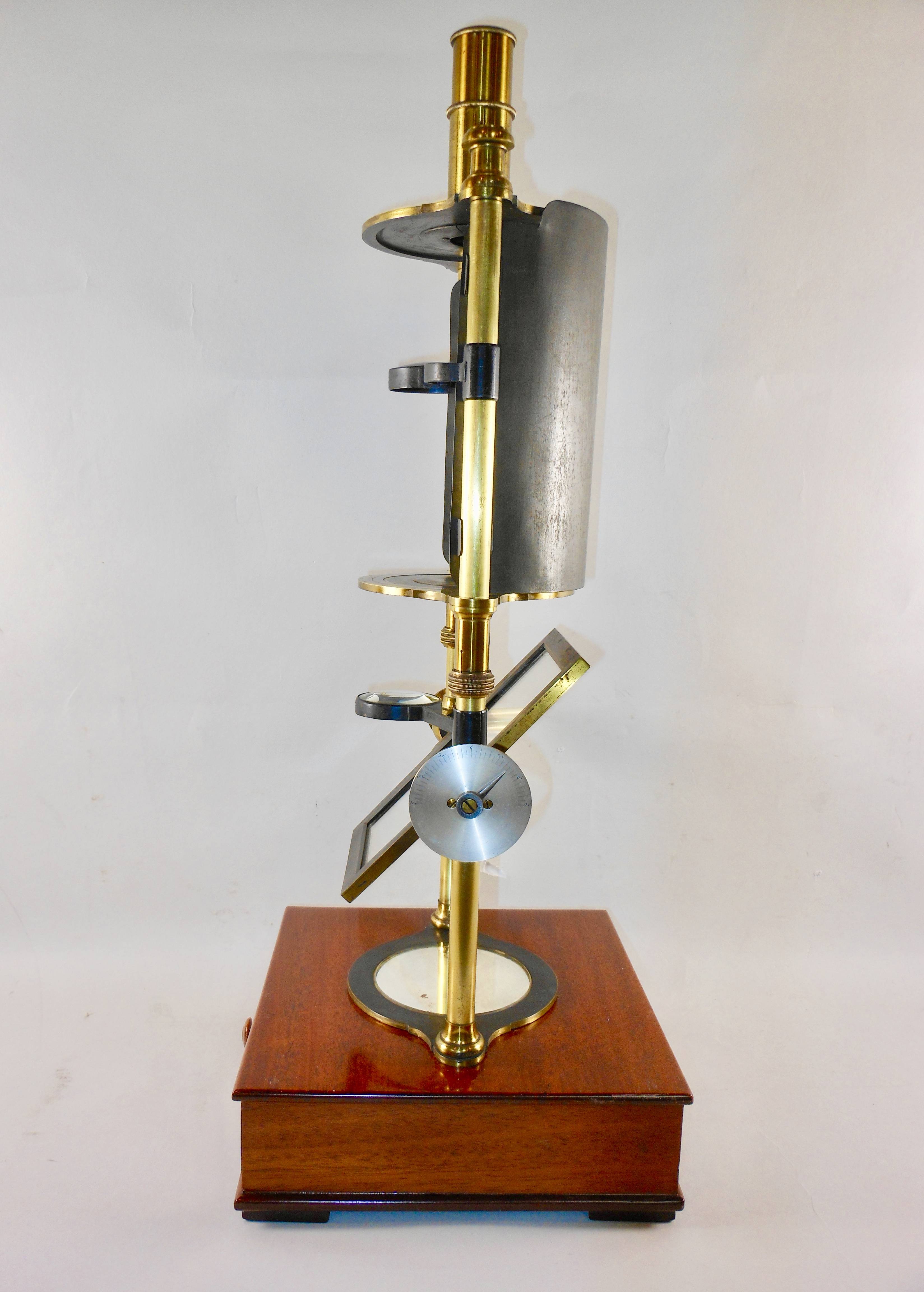
Norrenberg Polariscope c. mid to late 19th century J Duboscq, Paris Brass, wood, glass, Nicol prism Used to measure the polarization of light waves as they pass through various materials 20” high x 7-1/2” x 7-1/2” Polariscopes are used to measure the polarization of light waves as they pass through various materials such as crystals, quartz, mica, optical glass, etc. They are also used to determine the stresses and strains in these substances or to determine the various elements of construction of the specimens. The rotatable Nicol prism on this polariscope is mounted at the top of the two pillars inside the eyepiece that sits on the 3-1/2” diameter circle. The circle is graduated by one-half of a degree for the full 360 degrees and is read by means of a vernier. There is a removable black metal shade for better viewing under certain lighting conditions. The specimen plate is 3-7/8” in diameter and it is also engraved on the outer edge by one-half of a degree for 360 degrees. There are two removable plates within the main plate that are used for the various specimens and there are swing-away magnifiers above and below the specimen plate that are focused by sliding up or down on the pillars. The movable glass plate sits below the lower magnifier and is tilted by a large thumb screw. The amount of rotation is read by a pointer moving over a silvered dial which is engraved to increments of 5 degrees. Below the tilting glass plate is a 3” diameter mirror held in place by a brass frame. The frame sits on a 7-1/2” x 7-1/2” x 2-1/2" mahogany case which has a couple of specimen plates and tongs inside its pull-out drawer. The instrument stands 20” high. The polariscope is signed "J Duboscq a Paris". Duboscq apprenticed in 1834 to Jean Baptiste Françoise Soleil, a Parisian optician. He later married one of Soleil’s daughters and went into partnership with his father-in-law, forming the company of Duboscq-Soleil. Duboscq took over the firm of Soleil in 1849 and became one of Europe’s most important and talented scientific instrument makers. Mid to late 19th century The drawing legend for the drawing is as follows: The basic plan is shown in the photo. A light beam (A) reflects at Brewster’s angle from a glass plate (D), passes through the object (E) before and after reflecting from mirror (C), and then passes through the glass plate and reaches the eye at the top. The light is linearly polarized by reflection and then by transmission. (Source: “An Inexpensive Modern Norrenberg Doubler”, Phys. Teach., 19, 626-627 (1981) by Thomas Greenslade, Jr. Greenslade is a recognized expert in this field.) Antique Scientific Instrument